Table of Contents
- Why Mold Grows in Air Vents
- Sign 1: A Musty Odor When Your HVAC System Runs
- Sign 2: Visible Dark Spots on Vents or Diffusers
- Sign 3: Increased Allergy-Like Symptoms Indoors
- Sign 4: High Humidity and Condensation Near Vents
- Sign 5: Visible Water Stains or Past Leaks Near Ductwork
- How to Inspect Air Ducts for Mold
- Air Duct Cleaning and Sanitizing Services: What to Expect
- Frequently Asked Questions
Last Updated: September 30, 2026
Why Mold Grows in Air Vents
Mold in air vents is a common Florida problem, and it almost always starts with moisture. HVAC systems move cool air through ductwork, and condensation can develop when humid air contacts surfaces that are below the dew point. When moisture persists and suitable material is present, microbial growth can develop.
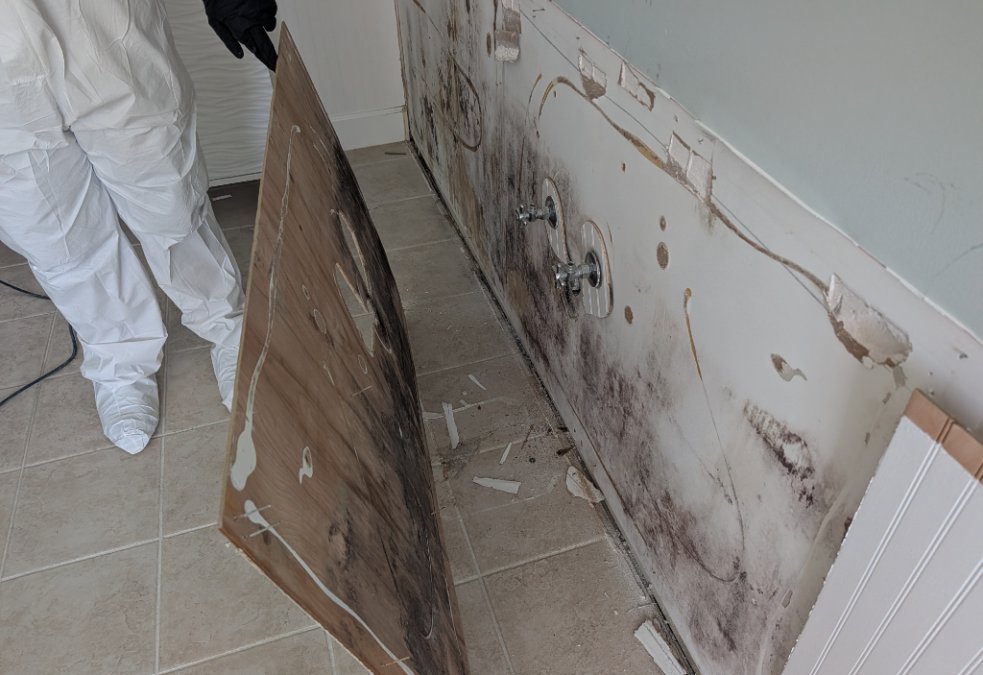
Three conditions drive growth inside ductwork:
- Moisture from high indoor humidity or a leak near the duct run
- Warmth from attic heat or unconditioned spaces
- Organic dust that settles on duct surfaces over time
Sign 1: A Musty Odor When Your HVAC System Runs
A musty or earthy odor that appears or becomes stronger when the HVAC system runs can be a reason to investigate the system and surrounding areas. The source may involve the air handler, ductwork, nearby building materials, or another moisture-affected area connected to the system.
Sign 2: Visible Dark Spots on Vents or Diffusers
Dark speckling on a vent or diffuser is the most visible sign of mold in air vents. Look for black, gray, or greenish patches on the slats, frame, and ceiling around the opening. Color alone never confirms what you're looking at.
Check these spots with a flashlight:
- Supply diffusers in bedrooms and living areas
- Return grilles, especially large central returns
- The edges where the vent meets drywall
- The inside of the boot where the duct meets the register
Telling Mold Apart From Dust, Soot, and Staining
What you see | How it behaves | Where it shows up |
|---|---|---|
Household dust | Dry, powdery, wipes off easily with a dry cloth | Even coating on horizontal slats and the top of the grille |
Soot or candle residue | Smudgy, gray-black, smears when rubbed | Concentrated near a candle, fireplace, or kitchen |
Water staining | Flat discoloration, no texture, no growth pattern | Drywall around the vent, ceiling rings |
Mold growth | Fuzzy, speckled, or clustered; may look powdery but regrows after cleaning | Slats, frame, boot interior, duct liner, coil cabinet |
A few observations can help determine whether further evaluation is warranted:
Appearance. Dust often appears as relatively uniform buildup, while suspected microbial growth may appear irregular, clustered, or textured. Appearance alone cannot confirm mold.
Odor. A persistent musty odor can indicate excess moisture or microbial growth, but odor alone cannot identify the source.
Moisture. Damp materials, condensation, or moisture staining near a vent increase the likelihood that conditions are favorable for microbial growth.
Recurrence. Discoloration or suspected growth that returns after cleaning may indicate that an underlying moisture condition has not been corrected.
If growth is limited to a small patch on a non-porous metal register, careful surface cleaning may be reasonable depending on the material and how much is affected. Suspected growth involving duct board, flex duct liner, insulation, or multiple areas requires additional evaluation because porous HVAC materials can be difficult to adequately clean and may require specialized remediation or replacement depending on their condition.
That is the point to bring in a professional evaluation.
Sign 3: Increased Allergy-Like Symptoms Indoors
If occupants notice congestion, sneezing, irritated eyes, or other symptoms that seem more noticeable indoors, indoor environmental conditions may be worth investigating. HVAC systems circulate air throughout the areas they serve, so moisture, dust, filtration, and other indoor air quality conditions should be considered as part of the overall evaluation.
Watch for patterns like these:
- Symptoms ease when away from home for a few days
- Complaints are worse in rooms closest to a suspect vent
- Symptoms track with the cooling season
Sign 4: High Humidity and Condensation Near Vents
Sustained elevated indoor humidity can create conditions favorable for microbial growth. Condensation may develop when humid air contacts vent surfaces that are below the dew point, potentially providing moisture to nearby materials.
Common causes of moisture buildup near vents:
- Oversized AC units that cool fast and run short cycles
- Clogged condensate drains that leave standing water
- Leaky duct connections pulling in humid attic air
- Bathroom and kitchen exhaust fans venting into the attic
Sign 5: Visible Water Stains or Past Leaks Near Ductwork
Water stains on ceilings, walls, or around vent openings are a strong signal of past or present leaks. Mold needs moisture, and even a dried stain can mark where growth started months ago.
Look for these clues:
- Yellow or brown rings on drywall near a vent
- Peeling paint or bubbling texture around a register
- Soft or stained attic sheathing above duct runs
- Rust on metal duct sections or on the air handler cabinet
How to Inspect Air Ducts for Mold
Learning how to inspect air ducts for mold starts with the accessible parts: vent covers, visible duct runs, and the air handler. A flashlight, screwdriver, and step stool cover most of it. You are looking for moisture, staining, and growth, not identifying a species.
A Room-by-Room Walkthrough
Work through the home in a set order so you don't miss branches. A typical system has one air handler, a main trunk, and branch runs to each room.
- Start at the thermostat. Turn the system off so the blower isn't pushing air while you work.
- Supply vents first. In each room, remove the grille with a screwdriver and look into the boot, the short transition between the duct and the register. Check the slats, the frame, and the drywall edge.
- Return grilles next. These are usually larger and often dirtier. Look for dark buildup on the grille face and inside the return box.
The air handler. Inspect readily accessible exterior areas, the filter location, and visible areas that do not require opening electrical or mechanical compartments. If you suspect moisture or microbial growth around the evaporator coil, blower compartment, or other internal components, have the system professionally evaluated.
- The condensate pan and drain line. Look for standing water, slime, or overflow staining. A clogged drain keeps the pan wet, and a wet pan keeps the cabinet humid.
- Attic or crawlspace duct runs. Where accessible, check flexible duct connections at plenums and boots for tears, disconnected sections, or condensation stains.
- Document as you go. Note the room, the vent type, and what you found. Photos from each location make the picture much clearer.
What Counts as a Normal Finding vs. a Suspect One
Not everything you see inside a duct is a problem. How to sort findings:
- Normal: light, even dust on metal surfaces; a dry pan; clean filter slot; no odor.
- Worth watching: localized dust buildup near a return; slight discoloration on duct board; intermittent musty smell.
- Stop and call a professional: visible fuzzy or speckled growth; damp duct liner or insulation; staining on the air handler cabinet; musty odor that returns after cleaning; growth on more than one branch run.
When to Stop the Inspection
Stop and bring in a professional if you find any of the following:
- Growth on porous materials such as duct board, flex duct liner, or insulation
- Widespread contamination across multiple vents or runs
- Moisture you cannot trace to a visible source
- A musty odor that persists after the system has been off for a day
A Simple Maintenance Schedule to Prevent Recurrence
Once the system is clean, keeping it that way is mostly about moisture and filtration:
- Filters: check monthly during heavy cooling season; replace or clean based on the manufacturer's recommendation and how quickly the filter loads up.
- Condensate drain: flush the line seasonally to prevent clogs that keep the pan wet.
- Humidity: keep indoor relative humidity in a range that discourages condensation on cold surfaces; a hygrometer helps you track it.
- Vent covers: vacuum dust from supply and return grilles a few times a year.
- Professional duct cleaning: consider it when you see visible debris buildup, after a known moisture event, or when odors persist, not on a fixed calendar.
Air Duct Cleaning and Sanitizing Services: What to Expect
Air duct cleaning and sanitizing are different services, and the appropriate approach depends on the condition of the HVAC system. Mechanical cleaning may be appropriate when significant debris or contamination needs to be physically removed, while sanitizing or treatment may be appropriate in other situations without unnecessary mechanical duct cleaning. Any underlying moisture condition should also be addressed so the problem does not simply return.
Here is how the two parts differ:
- Cleaning removes loose debris, dust, and surface contamination from ducts, registers, and the air handler.
Sanitizing applies an appropriate treatment to HVAC surfaces when conditions call for it and does not necessarily require mechanical duct cleaning first.
Situation | Typical Approach | Why |
|---|---|---|
Dust buildup, no moisture | Duct cleaning | Removes debris, restores airflow |
Musty odor, no visible growth | Inspection first, then cleaning if needed | Confirms whether growth is present |
Confirmed growth on porous duct liner | Remediation, possibly duct replacement | Porous materials often can't be cleaned |
Growth plus active leak | Fix moisture source first | Cleaning alone won't stop regrowth |
Frequently Asked Questions
What kills mold in air vents?
For minor surface growth on accessible metal vent covers, cleaning with a mild detergent solution and drying thoroughly may be enough. However, mold inside ductwork or on porous materials like insulation typically requires professional remediation. A licensed mold remediator can assess the extent of growth and determine the appropriate removal method. Air duct cleaning and sanitizing services may also help address contamination in the HVAC system. If you suspect mold in air vents, a professional inspection is the safest first step.
Can I still use my AC if it has mold?
An HVAC system can circulate airborne particles throughout the areas it serves, so suspected microbial growth within the system should be evaluated. Whether the system should remain in operation depends on the location and extent of the condition, the moisture source, and the components involved. A mold inspection can determine whether the growth is on accessible surfaces or inside ductwork. Depending on the findings, remediation may be needed before resuming normal operation. Contact a licensed mold remediator for guidance specific to your system.
How can I tell the difference between dust and mold in my vents?
Dust tends to appear as a uniform gray or brown film, while mold often shows up as dark, patchy spots that may be green, black, or white. Mold growth frequently has a musty odor, whereas dust typically does not. If you see discoloration that spreads or returns quickly after cleaning, mold is more likely. A professional mold inspection can confirm what you are seeing and recommend the right next step.
Does visible mold in air vents always require professional remediation?
Not always. Small amounts of surface mold on a vent cover may sometimes be cleaned by a homeowner if the material is non-porous and the moisture source is addressed. However, mold inside ductwork, on insulation, or spread across a large area typically requires professional remediation. A licensed remediator can evaluate the scope and determine whether air duct cleaning and sanitizing services or full remediation is appropriate. When in doubt, get a professional opinion.