Table of Contents
- When Indoor Air Quality Testing Actually Makes Sense
- Musty Smell in House Causes and What Testing Reveals
- The Indoor Air Quality Testing Process Explained
- Professional Air Quality Testing vs. DIY Monitors
- Common Indoor Pollutants and What You Should Know
- Signs You Need Professional Indoor Air Quality Testing
- ROI: Is Testing Worth the Investment?
- Conclusion
- Frequently Asked Questions
Last Updated: September 21, 2026
When Indoor Air Quality Testing Actually Makes Sense
Indoor air quality testing serves a real purpose, but not every home needs it. The decision depends on what you're actually trying to solve. testing may provide useful information as part of evaluating the problem. If you're simply curious about your air, a consumer-grade monitor might be enough. Understanding when professional indoor air quality testing is worth the investment means knowing the difference between what you can detect yourself and what requires lab analysis.
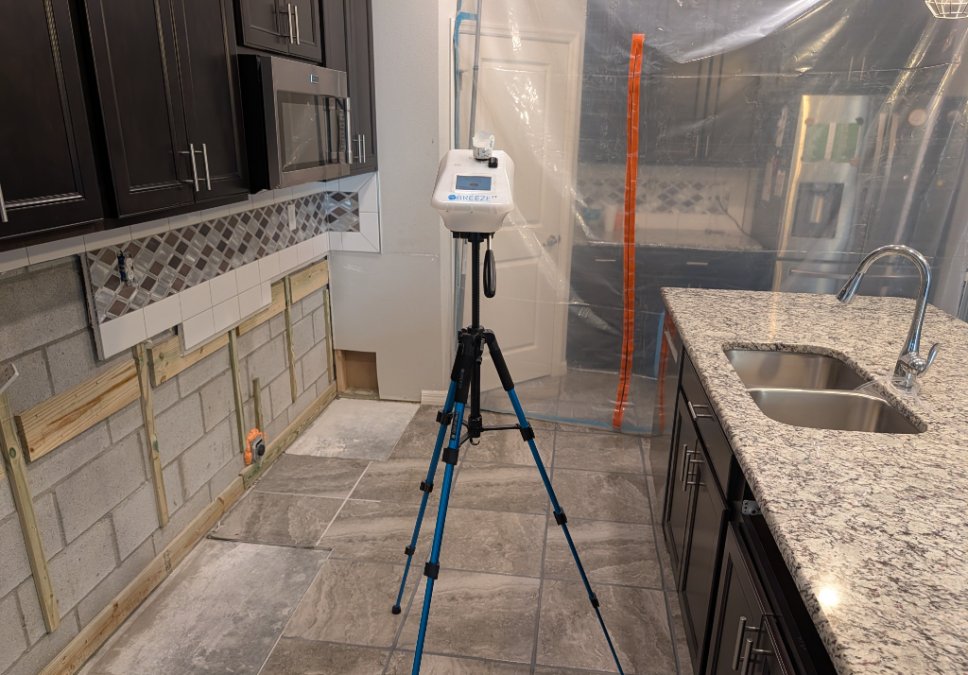
Testing makes sense when you have a specific symptom or concern that needs diagnosis. Generic testing "just to know" rarely changes anything.
Musty Smell in House Causes and What Testing Reveals
A musty smell in house interiors typically signals moisture and microbial growth, but the source isn't always obvious. Basements, crawlspaces, bathrooms, and HVAC systems are common culprits. The smell itself is often the first sign that something is off, but it doesn't tell you what or where.
Air sampling can detect mold spores and other airborne contaminants. However, a musty smell doesn't automatically indicate elevated mold levels, it may signal high humidity, poor ventilation, or organic material breaking down in damp areas.
Before testing, check for visible moisture, condensation, or damp spots. If the source is hidden and the smell persists, testing may provide additional information, but should be considered alongside a visual inspection and moisture evaluation.
The Indoor Air Quality Testing Process Explained
Professional indoor air quality testing follows a structured approach designed to capture accurate data about what's actually in your air.
What Professional Testing Measures
Mold spores are the primary focus in moisture-affected homes. Air samples collect particles from the environment and are sent to a laboratory for analysis. The lab identifies spore types and counts them.
Particulate matter includes dust and pollen. Smaller particles (like PM 2.5) penetrate deeper into the lungs.
Volatile organic compounds (VOCs) are off-gassing chemicals from building materials and furnishings. These require specialized testing equipment.
Carbon dioxide and carbon monoxide levels indicate ventilation effectiveness and potential combustion hazards. These are measured with direct-reading instruments rather than air samples.
Relative humidity affects mold growth and moisture-related conditions. Testing documents levels that may be driving other problems.
Different types of indoor air quality evaluations may use different testing methods depending on the concern being investigated. For mold-related concerns, air sampling may be useful in some evaluations depending on the conditions and the question being investigated.
How Results Are Used
Laboratory results show whether spore counts are elevated compared to outdoor levels, though elevated counts don't automatically require remediation.
Professional Air Quality Testing vs. DIY Monitors
The difference between professional testing and consumer-grade monitors comes down to accuracy, scope, and what you can actually do with the results. Understanding the real limitations of DIY devices helps you avoid false confidence or unnecessary panic.
How Consumer Monitors Actually Work (and Where They Fail)
Consumer air-quality monitor accuracy varies by device, the contaminant being measured, environmental conditions, sensor quality, and calibration. These devices can be useful for tracking trends, but their readings should not be treated as laboratory results.
Professional Testing: What Changes
Professional air sampling uses calibrated pumps to pull measured air through a collection medium. Samples are sealed and transported to a laboratory under chain-of-custody protocols. Lab technicians analyze samples under a microscope (for mold) or gas chromatography (for VOCs), identifying specific compounds.
When Each Approach Makes Sense
Use a consumer monitor if:
- You want to track humidity trends over time.
- You're curious about CO₂ levels to gauge ventilation (trends matter more than exact numbers).
- You're monitoring a remediated space for early warning of condition changes.
- You cannot afford professional testing and need some data to guide decisions.
Use professional testing if:
- You suspect mold and need confirmation.
- You're making a real estate decision or insurance claim.
- You've completed mold remediation and need verification that work was effective.
- You're investigating VOCs from new construction or recent renovation.
The Cost Reality
Consumer monitors vary in cost. Professional air sampling typically costs more per test, but the cost difference narrows when you factor in the cost of acting on bad data. A false negative from a consumer device might leave a mold problem unaddressed. A false positive might trigger unnecessary remediation. Professional testing can provide additional information to help guide the evaluation.
Common Indoor Pollutants and What You Should Know
Mold spores are present in every indoor environment. Indoor mold-spore results should be interpreted in context with outdoor samples, moisture conditions, visual observations, and the types of spores identified.
Signs You Need Professional Indoor Air Quality Testing
Several situations make professional testing genuinely useful rather than optional.
ROI: Is Testing Worth the Investment?
The return on investment for indoor air quality testing depends on what problem you're solving, what action follows, and whether testing actually changes your decision. A practical framework beats generic advice.
The Decision Tree: When Testing Pays for Itself
Scenario 1: You see visible mold or water damage.
- Without testing: You assume remediation is needed and proceed without knowing scope.
- With testing: Air sampling confirms whether spores are airborne.
- ROI calculation: Testing prevents over-remediation of small problems or confirms significant remediation is necessary. Testing also provides a baseline for post-remediation verification.
- Verdict: Testing has clear ROI when visible damage exists.
Scenario 2: You have a persistent musty smell but no visible moisture.
- Without testing: You might spend money on ventilation upgrades or dehumidifiers without knowing if mold is present.
- With testing: Air sampling identifies whether mold spores are elevated.
- ROI calculation: Testing prevents spending on the wrong solution.
- Verdict: Testing has ROI when the source is hidden and your next action is uncertain.
Scenario 3: You've completed mold remediation.
- Without testing: You assume the work is done. If incomplete, you won't know until the problem returns.
- With testing: Post-remediation air sampling provides laboratory data that can be considered along with visual and moisture conditions when evaluating remediation results.
- ROI calculation: Testing costs a fraction of remediation and protects your investment. If it reveals incomplete work, you catch it while the contractor is accountable.
- Verdict: Testing has strong ROI after remediation.
Scenario 4: You're buying or selling a property.
- Without testing: A buyer might negotiate down the price based on suspicion of mold. A seller might face liability claims later.
- With testing: Baseline air quality data supports negotiations.
- ROI calculation: Testing cost is often recovered in negotiation leverage.
- Verdict: Testing has ROI in real estate transactions.
Scenario 5: You're curious about your air quality but have no specific concern.
- Without testing: You avoid spending money.
- With testing: You get data, but unless results change what you do, testing provides information without actionable value.
- Verdict: Testing has limited ROI without a specific concern.
When Testing Can Provide Useful Information
Skipping testing in high-stakes situations can be expensive:
- Incomplete remediation: Without post-remediation verification, you might think a mold problem is solved when it isn't. The problem returns, requiring re-remediation and occupant disruption.
- Wrong diagnosis: Treating a humidity problem as a mold problem (or vice versa) wastes money on the wrong solution.
- Real estate liability: Selling a property without baseline air quality data leaves you exposed to claims if problems emerge later.
- Occupant uncertainty: Without testing, occupants may remain concerned about air quality even after visible problems are addressed, affecting comfort and confidence in your home.
The Practical Framework
Ask yourself three questions:
- Do I have a specific concern? (visible mold, musty smell, recent water damage, post-remediation verification, property transaction)
- Will the test result change what I do? (If yes, testing has ROI. If no, skip it.)
- Is the cost of testing less than the cost of guessing wrong?
If you answer yes to questions 1 and 2, testing is worth the investment. If you answer no to question 2, testing is unlikely to pay for itself.
Conclusion
Indoor air quality testing is worth the investment when you have a specific problem to diagnose and the results will guide your next steps. A persistent musty smell, visible moisture, or post-remediation verification are legitimate reasons to test. General curiosity or preventive testing without symptoms rarely changes anything.
Frequently Asked Questions
What's the difference between indoor air quality testing and mold testing?
Mold testing specifically looks for mold spores and fungal growth, while indoor air quality testing is broader—it measures multiple pollutants including volatile organic compounds, particulate matter, carbon dioxide, and relative humidity. Mold testing is one tool within the larger picture of air quality assessment. If you suspect mold or see visible growth, mold testing and remediation may be your priority; if you're concerned about general air quality, ventilation, or chemical off-gassing, a full air quality assessment is more appropriate.
How accurate are consumer-grade air quality monitors?
Consumer-grade monitors vary widely in accuracy and often require regular sensor calibration to stay reliable. Many lack the precision of laboratory-grade equipment and can produce false positives or miss low-level contaminants. They're useful for tracking trends in your own space, but they don't replace professional testing when you need definitive answers about specific pollutants like formaldehyde, radon, or mold spores. Professional testing submits samples to a laboratory for analysis, providing verified results.
Is indoor air quality testing worth it if I don't have visible mold or odors?
Testing can be worthwhile when there is a history of moisture problems, persistent odors, poor ventilation, recent renovations, or another specific indoor environmental concern. Testing gives you baseline measurements and identifies hidden problems like high humidity, low ventilation effectiveness, or chemical off-gassing from new materials. If you're simply curious with no specific concerns, a DIY monitor may be sufficient to start.
What should I do after I get indoor air quality testing results?
Results should guide your next steps. If testing identifies mold spores, visible growth, or moisture problems, professional remediation may be needed. For ventilation issues, appropriate HVAC or ventilation adjustments may help address the underlying condition. High particulate matter or volatile organic compounds might require air purification or source identification. For musty smell causes, testing helps pinpoint whether the issue is mold, humidity, or something else—so you address the actual problem rather than symptoms. A professional can interpret results and recommend appropriate mitigation strategies.