Last Updated: October 26, 2026
Quick Summary
Mold remediation in Titusville FL means physically removing mold growth and the moisture conditions that feed it, not masking it with a spray or paint. Start with an inspection to find the water source, then verify the contractor's Florida DBPR license and get a written, itemized quote.
- Attic condensation, crawlspace humidity, and AC or duct moisture are the recurring local moisture patterns.
- Florida mold licenses are public; confirm active status and the qualifying individual on the DBPR license search.
- A written quote should itemize areas, materials, removal versus clean-and-treat, and verification terms.
- JLX performs post-remediation air testing for occupied interior work, but not inside crawlspaces or attics.
- JLX will beat a comparable written quote from another Florida-licensed mold remediator by at least 10%.
Table of Contents
- What Mold Remediation in Titusville FL Actually Involves
- Mold Inspection Titusville FL: Finding the Source Before Anyone Quotes
- Mold Testing Titusville FL: What Samples Can and Cannot Tell You
- Mold Remediation Licensing Florida: How to Verify a Contractor
- Comparing Local Providers: Scope, Pricing, and What Drives the Quote
- The Remediation Workflow and Post-Remediation Verification
- Requesting a Written Quote for Your Titusville Property
- Frequently Asked Questions
What Mold Remediation in Titusville FL Actually Involves
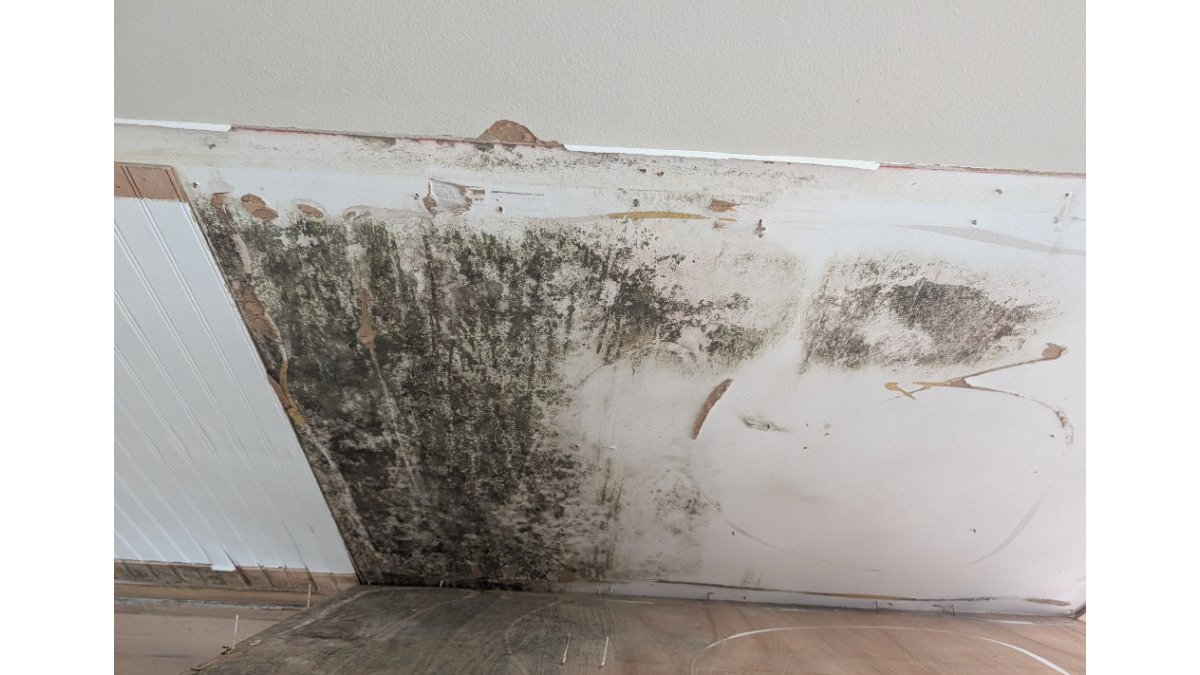
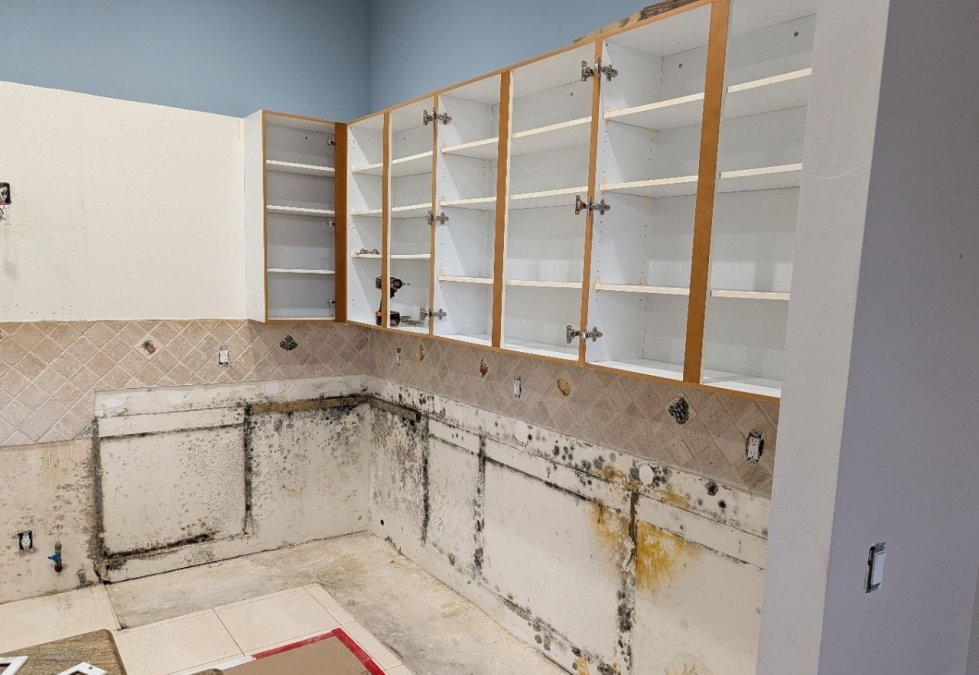
Mold remediation is the process of physically removing mold growth and the conditions that feed it, not masking it with a spray or a coat of paint. In Titusville, that work starts with finding where moisture is getting in, because mold returns whenever the water source stays active.
The distinction matters more here than in drier parts of the country.
Why the Local Climate Drives Recurring Moisture Problems
Brevard County's climate is the biggest reason mold comes back after a cleanup. Long humid seasons, heavy summer rain, and closed-up buildings with the AC running create what mold needs: moisture, warmth, and a food source like paper-facing drywall or wood framing.
Three local patterns show up again and again:
- Attic condensation. Humid air contacting cooler surfaces, poorly insulated or leaking AC ducts, and bathroom exhaust fans venting into the attic instead of outdoors can contribute to moisture buildup on sheathing and framing.
- Crawlspace humidity. Vapor rising from soil under a home without a proper barrier keeps joists and subflooring damp.
- AC and duct moisture. A system that short-cycles or has saturated insulation can hold moisture in the ductwork and spread spores through the house.
Treating visible growth without correcting the moisture source is the most common reason a remediation has to be repeated. The mold is a symptom; the water is the problem.
Mold Inspection Titusville FL: Finding the Source Before Anyone Quotes
A mold inspection is a visual and condition-based assessment of a property to locate active growth, moisture, and the likely source feeding it.
A useful inspection looks beyond the visible patch: it checks moisture content in building materials, examines attic and crawlspace conditions, reviews HVAC configuration, and asks about the building's history, past leaks, roof work, or a bathroom remodel.
At JLX Environmental, we evaluate the problem first and explain what we find in plain terms before discussing any work. You can read more about what a professional mold inspection involves to understand the steps and what the report should cover.
Mold Testing Titusville FL: What Samples Can and Cannot Tell You
Mold testing collects air, surface, or bulk samples and sends them to a laboratory for analysis.
A lab report lists spore types and counts; a trained assessor reads those results alongside inspection findings, moisture readings, building history, and sampling locations.
Testing is not automatically required before every remediation (the EPA). For sample types and lab methods, see how mold identification testing works.
Mold Remediation Licensing Florida: How to Verify a Contractor
Florida regulates mold remediation and mold assessment through the Department of Business and Professional Regulation (DBPR), and the license record is public. A license number on a business card proves nothing until you look it up. The state's license search confirms whether a license is active, what scope it covers, any disciplinary history, and whether the qualifying individual is still with the company.
A practical verification sequence looks like this:
- Get the license number in writing. Ask for it on the written quote. It should belong to the company performing the work, not a salesperson or separate entity.
- Look it up on the DBPR license search. Confirm active status, that the license type matches mold remediation or assessment work, and that it has not expired. Check disciplinary history, a public complaint or citation is worth asking about.
- Confirm the qualifying individual. Florida licenses are tied to a qualifying individual. If that person has left, the license status may not reflect the crew on site.
- Request a certificate of insurance. Ask for general liability and, where applicable, workers' compensation. The certificate should name the insured entity matching the license, show current policy dates, and list coverage limits. Call the agent to confirm it is in force.
- Match the scope to the license. A license to assess is not a license to remediate. If a company offers both, ask whether the same entity performs both or an independent assessor is involved.
What the Written Quote Should Contain
The license check is only half of the credential review. A quote worth comparing should state:
- The property address and the specific areas or materials to be addressed.
- What will be removed versus cleaned and treated in place.
- How containment will be handled for the scope described, matched to the job rather than applied the same way every time.
A one-line quote is not comparable to one that itemizes areas, materials, and verification. Comparing them on price alone compares different amounts of work.
Questions Worth Asking Before You Sign
- Who is the qualifying individual on the license, and will they be involved in this project?
- Does the quote include post-remediation verification, and is it air testing or visual only?
- What happens if the moisture source turns out to be a plumbing or roofing problem outside the remediation scope?
A common mistake is choosing on price alone without comparing scope. Two quotes can look similar and cover very different amounts of work. If you are weighing several companies, this guide on how to choose a mold detection company covers the credentials and report details worth comparing.
Comparing Local Providers: Scope, Pricing, and What Drives the Quote
Most mold remediation pages say to "get three quotes" without explaining what you are comparing. Quotes that look alike on the first page often diverge sharply once you read the scope, verification terms, and each contractor's assumptions about the moisture source. Start with the cost drivers, then move to the documents.
What Drives the Number
Mold remediation pricing is scoped to the property, so the drivers matter more than any single figure. The main ones:
- Size and location of the affected area. A bathroom wall cavity is a different job from an attic spanning the length of the house. Accessibility, crawlspaces, finished basements, tight mechanical closets, adds labor and containment complexity.
- Materials involved. Porous materials such as drywall, insulation, and carpet-facing typically cannot be cleaned in place and are removed. Solid framing and sheathing may be cleaned and treated depending on condition. The porous-versus-non-porous mix is often the biggest swing in scope.
- Extent of growth versus extent of moisture. Visible growth is one measure; the moisture feeding it is another. A small patch fed by an active roof leak is a different scope than one fed by a one-time event that has since dried.
JLX Environmental does not publish flat-rate remediation pricing because the scope drives the number. We do offer a Quote-Beat Guarantee: we will beat a comparable written mold-remediation quote from another Florida-licensed mold remediator by at least 10%. The word comparable matters, the guarantee applies to written quotes for the same remediation scope from a Florida-licensed mold remediator, not to handyman or non-remediation quotes.
A Side-by-Side Comparison Framework
Use the same criteria for every provider so the comparison is apples to apples.
What to compare | What a strong quote shows | What to question |
|---|---|---|
Scope of work | Itemized by area and material; removal versus clean-and-treat called out | One-line scope or verbal description |
Pricing basis | Fixed quote after an on-site inspection, with change-order terms stated | Phone quote without a visit, or a price that can move without explanation |
Verification | Post-remediation air testing with lab analysis, or clearly stated visual verification | No verification offered, or verification described vaguely |
Licensing | Active Florida license number on the quote, verifiable through DBPR | Number refused, unclear, or belonging to a different entity |
Insurance | Current certificate of insurance naming the quoting entity | Certificate not offered, expired, or naming another company |
Moisture source | Source identified and addressed in the plan, with out-of-scope repairs called out | Growth treated with no plan for the source |
HVAC | Ductwork and air handler addressed or explicitly excluded | HVAC not mentioned at all |
Crawlspace and attic | Verification approach stated for those spaces | Air sampling promised in a crawlspace or attic |
Insurance Documentation and the Comparison
Insurance coverage for mold remediation varies by policy, cause of loss, and policy language. A contractor cannot promise coverage, and a remediation quote is not a coverage determination.
Ask each provider what documentation they will produce: inspection findings, moisture readings, photographs, the written scope, and post-remediation verification results. Ask whether they will communicate with your adjuster. Coverage questions belong with your insurer or adjuster.
How to Sequence the Comparison
- Get an on-site inspection from each provider you are seriously considering. Phone quotes are not comparable.
- Ask for the written quote and the license number together.
- Verify the license through DBPR and confirm the certificate of insurance before comparing prices.
- Compare scope line by line, then verification, then price.
- Ask each provider to explain any line item you do not understand.
The lowest number is rarely the cheapest outcome if it leaves the moisture source in place or excludes verification. A quote covering removal of saturated materials and laboratory-analyzed post-remediation air testing is not the same product as a lower quote that treats the surface and walks away.
The Remediation Workflow and Post-Remediation Verification
Remediation typically follows a sequence: contain the work area, remove affected materials, clean and treat surfaces, and verify the result. The underlying moisture source must also be corrected to help prevent recurrence. Plumbing, roofing, and other repairs outside the remediation scope should be handled by the appropriate qualified professionals.
For normal occupied interior work, JLX Environmental performs post-remediation air testing after remediation and submits the samples to a laboratory for analysis. Those results are read together with visual and condition-based observations. You can read the full five-step remediation process for the details.
The Crawlspace and Attic Exception
Crawlspaces and attics are handled differently. JLX Environmental does not perform air sampling or post-remediation air testing inside crawlspaces or attics. Verification in those spaces is visual and condition-based, because the conditions there do not support the same sampling approach used in occupied interior rooms.
Requesting a Written Quote for Your Titusville Property
A written quote should follow an inspection, not replace it.
At JLX Environmental, we evaluate the problem, explain what we find, and define the scope the property actually needs. If you are ready to move forward, you can request a free written mold remediation quote for your property.
Mold problems in a humid climate rarely fix themselves, and the difference between a lasting result and a repeat visit usually comes down to whether the moisture source was found and addressed.
Frequently Asked Questions
Is mold testing required before remediation?
No. Pre-remediation air testing is not required or automatically included with every remediation, and a mold concern or visible growth does not by itself mean air sampling is necessary. Sampling results are one source of information, read alongside visual observations, moisture conditions, building history, and spore types. Air sampling alone does not determine whether remediation is needed, how large the scope should be, what containment is appropriate, which materials come out, or where the growth is actually located. A qualified provider should explain what testing would add to your specific situation before you pay for it.
How do I verify mold remediation licensing in Florida?
Ask for the license number and confirm it against the state database before work begins, not after. In Florida, mold remediation and mold assessment are licensed activities, and a company performing remediation should hold the appropriate license and carry insurance. Also ask who will supervise the remediation work and confirm that the company operates under the appropriate Florida mold remediation license. A written quote should name the license holder. If a provider cannot produce a license number on request, treat that as a reason to keep looking rather than a detail to sort out later.
What is post-remediation verification and does it prove my home is mold-free?
Post-remediation verification is the step after remediation where conditions are evaluated to confirm the work addressed what was scoped. For normal occupied interior remediation, JLX performs post-remediation air testing after its remediation work and submits samples to a laboratory for analysis; customers may choose an independent third-party verifier, though third-party verification is not required. Laboratory results are used together with visual and condition-based observations. Verification does not prove a property is mold-free, safe, or guaranteed free of future mold, and it does not replace fixing the moisture source.
How is remediation work evaluated after it is complete?
Evaluation combines what was seen during the work with what conditions look like afterward. That typically includes a visual walkthrough of the remediated areas, confirmation that affected materials were handled as scoped, and, for occupied interior spaces, post-remediation air samples submitted to a laboratory. The results are interpreted with visual observations, moisture conditions, building history, and spore types rather than read as a simple pass or fail. Crawlspaces and attics are evaluated visually and by condition, since air sampling is not performed in those spaces. Ask for the findings in writing.
