Last Updated: November 5, 2026
Quick Summary
Indoor air quality testing in Vero Beach is the process of collecting physical samples from a property and having a laboratory analyze them for airborne contaminants. A thorough assessment reads sampling data alongside visual observations, moisture conditions, and building history, because a lab report is a data set, not a verdict.
- Most residential assessments take one to three hours on site, with lab turnaround of a few business days.
- Air sampling describes what is suspended in the air at the moment of collection, not the source.
- Florida homes stay closed and air-conditioned most of the year, so moisture has fewer chances to dry out.
- Ask whether the company provides both mold assessment and remediation services, and how it complies with Florida's licensing and conflict-of-interest requirements.
- JLX does not collect air samples inside crawlspaces or attics; verification there is visual and condition-based.
Table of Contents
- What Indoor Air Quality Testing in Vero Beach Actually Measures
- Matching the Test to the Concern: Mold, Moisture, Odors, and Ventilation
- Why Florida Homes Test Differently Than Homes Up North
- What to Expect During an Indoor Air Quality Assessment
- How Long Does Indoor Air Quality Testing Take?
- Questions to Ask an Indoor Air Quality Testing Company
- Reading Indoor Air Quality Testing Vero Beach FL Reviews
- Requesting a Quote for Your Vero Beach Property
- Frequently Asked Questions
What Indoor Air Quality Testing in Vero Beach Actually Measures
Indoor air quality testing in Vero Beach FL is the process of collecting physical samples from a home or commercial property and having a laboratory analyze them for airborne contaminants. A thorough assessment treats it as one piece of a larger picture: sampling data, visual observations, moisture conditions, and building history read together.
That distinction matters more than most homeowners expect. A lab report is a data set, not a verdict.
Air Sampling Versus Surface Sampling
Air sampling pulls a measured volume of air through a collection device, then a certified laboratory analyzes what was captured. Surface sampling takes a direct sample from a material or a visible growth area. The two answer different questions. Air sampling describes what is suspended in the air at the moment of collection. Surface sampling tells you what is growing on a specific material. If you want a step-by-step walkthrough of the air sampling process itself, see what happens during mold air sampling.
What a Laboratory Report Can and Cannot Tell You
A lab report identifies what was captured and in what quantity. For a straight comparison of professional testing versus DIY monitors and when testing is actually worth it, see Is Indoor Air Quality Testing Worth It?. It cannot tell you whether remediation is necessary, how far a problem extends, where the moisture is coming from, or what should be removed. Those conclusions come from an inspector reading the data alongside the property's condition. Treat any provider who presents a lab report as a standalone yes-or-no answer with caution.
Matching the Test to the Concern: Mold, Moisture, Odors, and Ventilation
The right test depends entirely on what you are trying to learn. A musty odor points toward a moisture investigation. Visible growth on drywall points toward a scope assessment. If your concern is mold specifically, mold testing in Vero Beach explains inspection versus testing and how to choose a provider.
Most homeowners assume "indoor air quality testing" is one product. In practice it is a family of assessments, each answering a different question.
Concern | What Usually Helps | What It Won't Answer |
|---|---|---|
Musty odor, no visible growth | Moisture investigation plus targeted sampling | Where the moisture originates |
Visible growth on one material | Visual assessment and scope definition | Whether hidden growth exists elsewhere |
Stale or stuffy air | Ventilation and HVAC review | Contaminant concentrations |
Recent water intrusion | Moisture mapping and condition review | Whether repairs are needed |
Dust complaints or surface residue | Dust or surface sampling with lab analysis | Airborne concentrations at other times |
Concern about a specific contaminant (VOCs, combustion byproducts, radon) | Specialized testing by a provider equipped for it | General mold or moisture questions |
What Each Common Test Actually Measures
Surface sampling. A direct sample, a tape lift, swab, or bulk piece of material, taken from a specific location. Surface sampling tells you what is on that material.
Dust sampling. Collects settled dust, typically from a defined area, and analyzes it in a lab.
Moisture investigation. Not a lab test in the usual sense. An inspector uses moisture meters, visual observation, and building knowledge to find where water is entering or accumulating (the EPA).
Specialized contaminant testing. Volatile organic compounds, combustion byproducts, radon, and similar targeted analyses require specific equipment and laboratory methods.
Why the Concern Comes Before the Sample
A common pattern in this kind of work is a homeowner who orders air sampling first and then tries to interpret the report without a moisture investigation or visual assessment to anchor it.
Watch out: a lab report that lists spore types and counts is not a pass-or-fail document. Treating it as one, or accepting a provider who presents it that way, is the most common way homeowners end up paying for sampling that does not change what they do next.
Why Florida Homes Test Differently Than Homes Up North
Humidity is the variable that changes everything here. The EPA's guidance on indoor air quality makes the same general point: source control and moisture management come before anything else. For practical strategies, see ways to improve indoor air quality in humid climates.
That general point is worth unpacking, because the specific mechanisms that drive indoor air problems in this climate are different from the ones a northern homeowner would recognize.
The Air-Conditioning Envelope
A Florida home in cooling season is a closed system for most of the year. Windows stay shut, the air handler runs daily, and the building relies on the HVAC system to manage both temperature and humidity. When that system is sized, balanced, and maintained well, it does its job.
Common patterns include:
- Return-air paths that pull from unintended spaces. A return duct that draws from a humid attic, crawlspace, or garage introduces moisture-laden air into the living space and can create a pressure imbalance that pulls outdoor humid air through envelope gaps.
- Short cycling. An oversized system that cools quickly but does not run long enough to remove moisture leaves indoor humidity elevated even when the thermostat reads comfortable.
- Duct leakage in unconditioned space. Leaky supply or return ducts in an attic can lose conditioned air and draw in hot, humid attic air, which then reaches the living space.
- Filter and coil neglect. A restricted filter or a fouled evaporator coil reduces airflow and dehumidification, and in some cases contributes to moisture conditions inside the air handler itself.
None of these are mold tests. They are building and HVAC conditions that a thorough assessment should look at, because they shape what any sampling result means.
Attics and Crawlspaces Behave Differently Here
A northern basement is typically cool and, when managed, dry. A Florida crawlspace is often warm, humid, and vented to outdoor air that is itself humid for much of the year.
JLX does not collect air samples inside crawlspaces or attics. Verification in those spaces is visual and condition-based, which is appropriate because the questions there are about materials, moisture, and construction, not about a single airborne snapshot.
What This Means for Testing
A Florida assessment should look at the building as a system: how the HVAC is configured, where return air comes from, how the attic and crawlspace are vented or sealed, and where moisture has a path in. Sampling, when it is appropriate, is read against those conditions.
Watch out: a home can have elevated indoor humidity and visible moisture conditions without a dramatic sampling result, and it can have a sampling result that looks unremarkable while a moisture problem is quietly developing behind a cabinet or under flooring.
What to Expect During an Indoor Air Quality Assessment
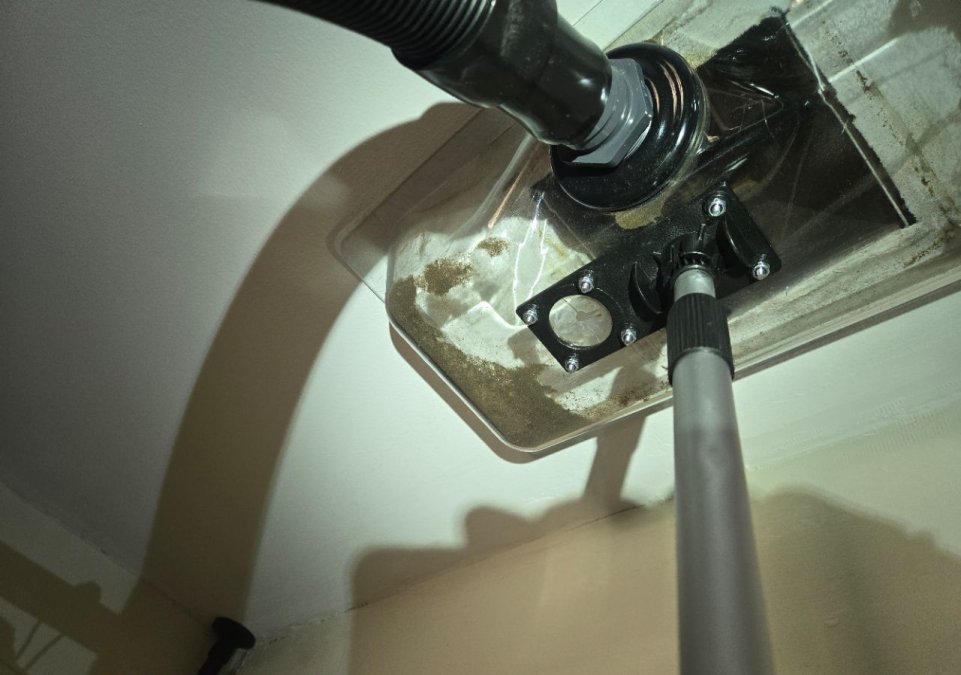
Expect the inspector to ask about building history, recent repairs, and how the space is used. Those details shape how results get interpreted later.
How Long Does Indoor Air Quality Testing Take?
Most residential assessments take one to three hours on site, depending on square footage and how many samples are collected. Laboratory turnaround typically runs a few business days after samples ship. Total time from visit to report usually lands within a week.
Sampling itself is quick. The walkthrough and the conversation around it take longer, and that is where most of the value sits. A provider who rushes the visual portion to get to the sampling is skipping the part that gives the numbers meaning.
Questions to Ask an Indoor Air Quality Testing Company
Ask what the provider is licensed to do, who analyzes the samples, and whether the same company also performs remediation. That last question matters because Florida regulates mold assessment and remediation separately and places restrictions on performing both services on the same project. Homeowners should understand the company's licensing, the services it will perform, and whether an independent assessment is appropriate.
Other questions worth asking:
- What will the report actually contain, and who explains it to me?
- Which sampling methods will be used, and why those?
- Is post-remediation verification offered, and is it done by the same firm or a third party?
- What is the scope of the quote, and what would change it?
- Are crawlspaces and attics handled differently from living space?
Remediation and post-remediation air testing are separate steps, and customers may bring in an independent third-party verifier if they prefer. Verification inside crawlspaces or attics is visual and condition-based rather than air sampling.
Reading Indoor Air Quality Testing Vero Beach FL Reviews
Reviews tell you about communication and follow-through more reliably than they tell you about technical quality. Look for patterns: did the provider explain findings clearly, did the scope match the quote, did they show up when scheduled. A single glowing review is noise. Repeated mentions of the same strength or the same complaint are signal.
Be skeptical of reviews that promise a property is "mold-free" or "safe" after testing. No sampling method supports that claim, and a provider who makes it is telling you something about how they operate.
Requesting a Quote for Your Vero Beach Property
A useful quote names the scope, the sampling approach, and what happens after the report lands. Ask for it in writing.
To see the full scope of professional mold testing and indoor air sampling, visit our mold testing services.
If your home or commercial property has a moisture question you cannot pin down, start with an assessment rather than a guess. JLX Environmental is a family-owned environmental services company serving Florida's Treasure Coast and Space Coast, led by Devon Morante, who holds both Florida mold remediator and mold assessor licenses.
Frequently Asked Questions
What does indoor air quality testing check for?
It depends on the scope you book. A typical residential evaluation combines a visual inspection of the building and HVAC system with moisture readings, and may include air sampling for airborne mold spores, surface sampling of visible growth, or both. Air sampling results are interpreted alongside what the inspector observed, not on their own. Specialty testing such as volatile organic compounds or particulate matter is a separate scope and should be confirmed with the provider before booking, since not every company offers it.
Is mold testing included in an indoor air quality evaluation?
Not automatically. Some evaluations focus on moisture, ventilation, and visible conditions without collecting air samples, and pre-remediation air testing is not required for every project. Ask the provider to state in writing whether sampling is included, how many samples, and what the lab report will cover. If visible mold is present, the more useful question is often what the scope of remediation looks like, since air sampling alone does not determine whether work is needed or how far it should go.
Can air sampling alone determine whether a building has mold?
No. Air sampling is one source of information and is read together with visual observations, moisture conditions, building history, and the types of spores found. It does not pinpoint the source or extent of growth, and it does not decide remediation scope. A provider who presents a single air sample as proof that a home is mold-free is overstating what the method can do. Treat results as part of an assessment, not a verdict.
How do I choose an indoor air quality testing company in Vero Beach?
Start with licensing and scope. In Florida, mold assessment and remediation are regulated, so confirm the company holds the appropriate license and ask who performs the sampling and which laboratory analyzes it. Ask what the report includes, whether the inspector explains limitations, and whether the company also performs remediation, since that combination deserves a clear conversation about how recommendations are made. Read recent local reviews for specifics about communication and follow-through rather than star counts alone.
